INQUISITION INSIGHT
A Deep Dive into KL’s Pasar Seni

Articles
A Deep Dive into KL’s Pasar Seni
Central Market: Has It Become Modernised?
By: Dania Zulaikha, Adam Aznijar, Kamalin Huda and Ahmad Faiz
The cultural and heritage site where the heart and soul of various arts such as hand woven products, wood carvings, and batik comes alive since the 19th century is slowly losing its essence in showcasing Malaysian culture.
One of the best-repurposed heritage buildings in the capital city called Central Market Kuala Lumpur, or better known as Pasar Seni is a favourite destination for travellers known for its diverse range of arts, crafts, and cultural activities.
With over 300 stores placed in the building, Central Market's history dates back more than a century, making it one of Kuala Lumpur's iconic landmarks.
Originally built as a wet market, it quickly evolved into a trading hub for local artisans and craftsmen. Over the years, it has been a witness to the city's growth and transformation.
Upon the number of people who visit the well known tourist attraction which leads up to approximately 12,000 visitors on the weekend since the year 2022, the Central Market continues to remain as one of the most historical buildings in Malaysia for tourists and locals to visit.
Despite the abundant attention and attraction to the Central Market building, there seems to be an observation where the Central Market is slowly turning modernised, with a minority of the old stores being pushed to the back and placed outside the building or relocated on the second floor of the building instead.
The majority of art-focused traditional stores in the Central Market building has its focus from signifying the unique handicrafts of local souvenirs taken away and locals seem to notice the pattern of it as well.
Karmila, a 21 year old art enthusiast believes the Central Market building is now focused on making the place an eye-catching place for taking photographs instead of appreciating the culture and handicrafts.
“I noticed the people who come here, especially those around my age, never actually care about the stores selling all the handcrafted wood souvenirs, unique keychains, and batik cloths, all that’s important for them is to capture pictures of themselves.
“The impact of social media is especially huge for my generation, but I believe not many of those who visit Central Market really appreciate the old, unique culture of Malaysian art.”
In 2004, Kha Seng Group, the current management, obtained a 60-year lease for the structure and proceeded to conduct significant renovations. These enhancements included the addition of more shopping aisles and the reduction of shop sizes.
The most recent significant improvement took place in 2010 with the introduction of Kasturi Walk.

What do the vendors say?
Nuar, the owner of the longest operating store in the building since 1988, who has been taking charge of the store after the passing of his sister shares his thoughts on the relationship between the management and the vendors in the building.
His shop ‘Songket & Sutera Asli’ , which sells songket had gone through a decline in sales for his business.
Nuar adds that he is extremely disgruntled towards the new management of the building as he highlights the management does not care enough for the vendors.
Nuar reveals that the management has been pushing all the other craft-focused vendors behind and making room for new stores to be the centre and main focus instead.
"Their strategy is not about the tenants, they care about their income"
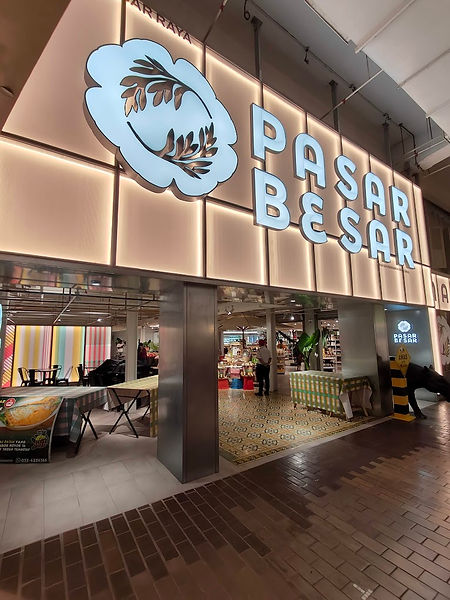
In recent years, Central Market has undergone a series of modernization initiatives to stay relevant in a rapidly changing urban landscape. The management has strategically incorporated modern amenities, technology, and contemporary design elements to enhance the overall visitor experience.
Source: Google Images
Constant updates in infrastructure, lighting, and accessibility have been made without completely compromising the market's historical significance but multiple store owners believe otherwise.
The upgrading of the Central Market’s Pasar Besar involves enhancements to the infrastructure, resulting in a facility with three to five times its current floor space.
The modernization plan also incorporates technological advancements, including mechanisation and environmentally friendly practices such as the implementation of solar panels and the establishment of recycling facilities.
Nuar emphasises that the Central Market is called Pasar Seni or Pasar Budaya to highlight the significance of culture, not for it to reform as a shopping complex.
Even with its updated purpose, Central Market remains a community hub, drawing both locals and tourists due to its heritage, strategic location, and positioning.
For many young Malaysians, Central Market is primarily seen as a destination for souvenirs, and some may be unfamiliar with its broader significance.
Older individuals might admit to not having visited the place in a considerable time. Consequently, there is an effort to encourage more Malaysians to explore and visit Central Market despite the slight modernisation elements of the building.
Aznijar, 57, a local who was always an avid admirer of the Central Market visited the building again after years of not stepping in and could barely recognise the building anymore.
"I used to frequent this place often in the 80s and coming here again after many years brings back many memories but it stops at the entrance, once you go inside its completely different"